
An independently researched New Forest guide
7 of the best dog walks in the New Forest
Seven properly sourced routes through the New Forest, from a flat quarter-mile oak trail to longer woodland and heathland circuits, with exact starts, official route links and the dog rules that matter.
Researched by Pet Storybook Details verified 16 September 2026
Start here
Which New Forest dog walk fits today?
Seven marked routes worth planning properly
These are marked or published routes rather than loose place suggestions. Each profile separates the arrival pin from the official route, and tells you about surfaces, gates, shared cycle sections, parking limits and seasonal wildlife rules before you set off.
The Forest is a working landscape with free-roaming livestock. Keep every dog close and visible, carry a lead, use it in car parks and beside roads, and put it on whenever recall, livestock, wildlife or another visitor makes close control uncertain.
Bolderwood, near Lyndhurst A very short waymarked loop with benches and a viewpoint
Bolderwood Deer Watch Trail
- Distance
- 0.75km (0.5 miles)
- Time
- About 15 minutes
- Ground
- Moderately smooth gravel with gentle slopes, benches and one gate with a low catch
- Start
- Bolderwood car park, beside the waymarked trail board
The route
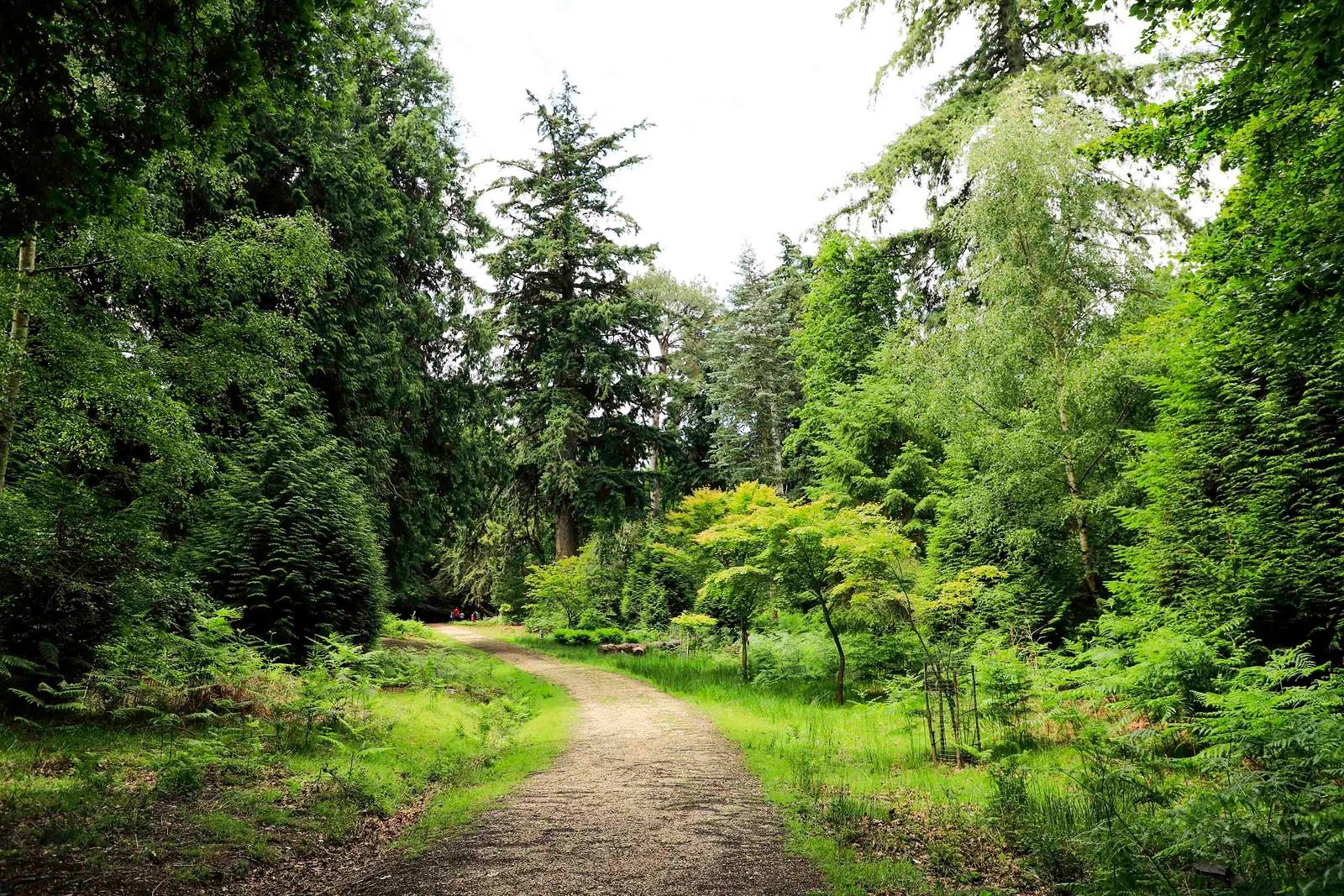
Follow the yellow waymarker posts from Bolderwood car park around the short circular trail to the viewpoint over the forest and meadows, then continue on the marked loop back to the car park.
Open the official Deer Watch Trail routeWhat dog owners need to know
Keep your dog close, visible and under effective control. Use a lead if recall is unreliable, and do not let dogs approach or chase deer, ponies, cattle or other wildlife. From March to August stay on the main tracks to protect ground-nesting birds.
Before you go
The Forestry England car park is open from 4am to 11pm and has accessible bays, toilets and picnic space. Parking charges apply and there is no cash payment. If it is full, Forestry England asks visitors to use Bratley View or Canadian Memorial rather than the verges.
Watch for: The old deer sanctuary and feeding station no longer operate. Deer sightings are never guaranteed, and the viewpoint makes close control especially important.
Knightwood, near Lyndhurst A flat, accessible stroll to the oldest oak in the New Forest
Knightwood Oak Trail
- Distance
- 0.4km (0.25 miles)
- Time
- About 15 minutes
- Ground
- Flat, fairly smooth gravel with benches and no gates, suitable for pushchairs, manual wheelchairs and mobility scooters
- Start
- Knightwood Oak car park on Ornamental Drive
The route
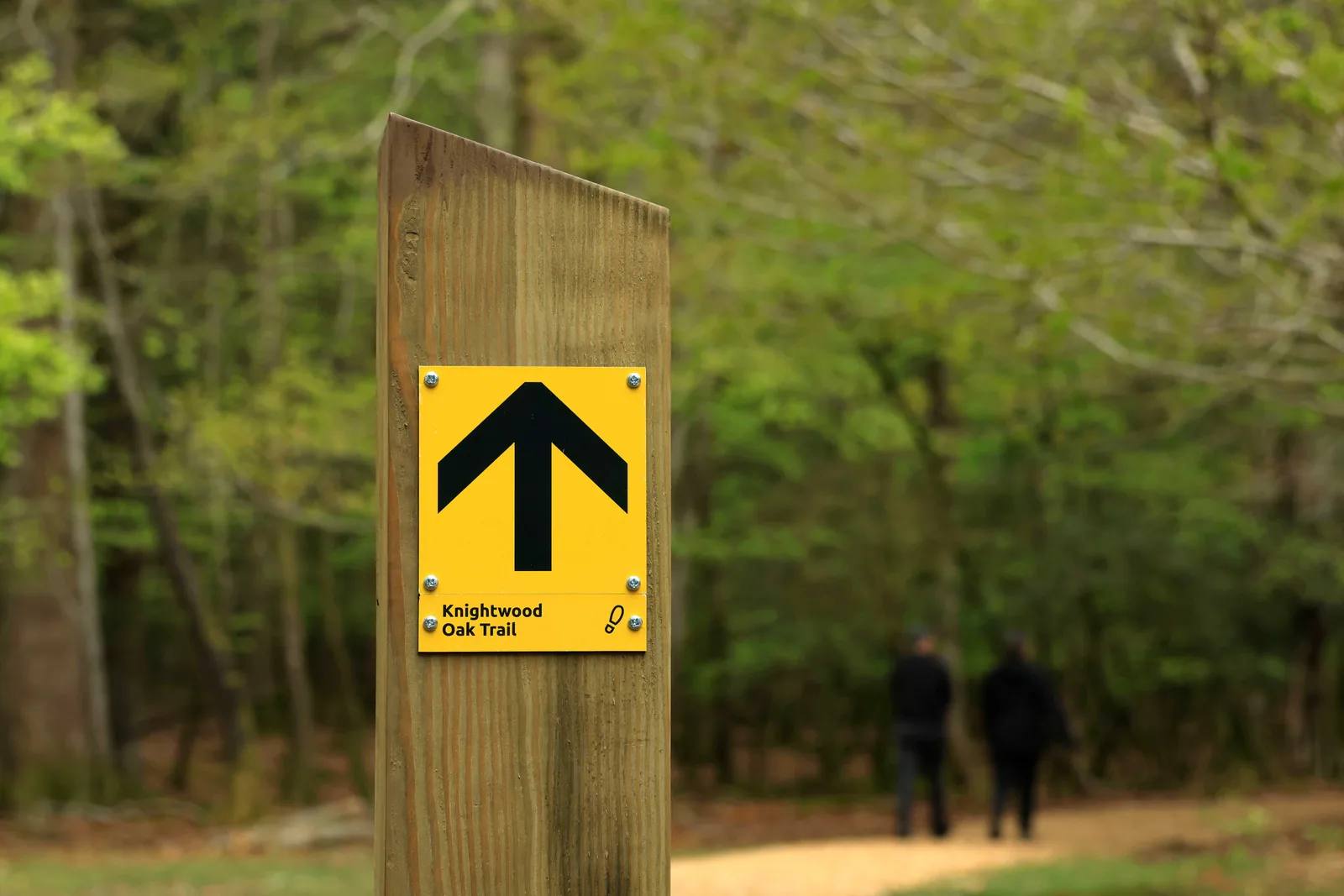
Leave Knightwood Oak car park, cross Ornamental Drive with care and follow the signed gravel trail to the oak. Continue around the short loop and return by the same marked path system.
Open the official Knightwood Oak Trail routeWhat dog owners need to know
Dogs are allowed, but keep them on a lead in the car park and beside the road. On the trail, keep them close and under effective control around grazing animals and wildlife. From March to August remain on the main tracks with your dog.
Before you go
Parking is permitted from 4am to 11pm. The car park has two accessible spaces and picnic benches, but no toilets are listed at the site. Parking charges apply and payment is cashless.
Watch for: The trail crosses the road immediately after the car park. The route is very short, so it suits a gentle outing or an add-on rather than a full-length walk.
Blackwater, Rhinefield Ornamental Drive A gentle forest loop beneath giant redwoods and Douglas firs
Blackwater Tall Trees Trail
- Distance
- 2.4km (1.5 miles)
- Time
- About 40 minutes
- Ground
- Fairly smooth gravel with one gentle slope, resting places, no gates, two road crossings and a 1.1m chicane
- Start
- Blackwater car park on Rhinefield Ornamental Drive
The route
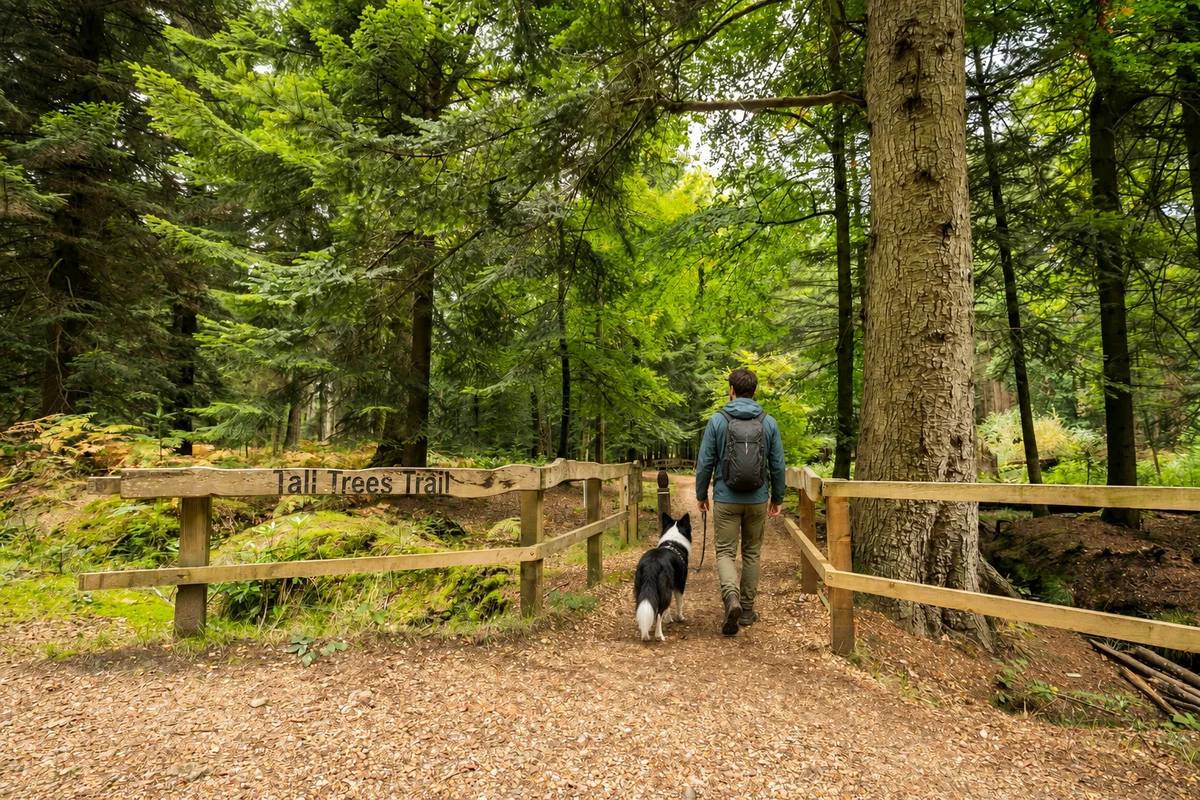
Walk through the wooden arch from Blackwater car park, cross Rhinefield Ornamental Drive and follow the Tall Trees marker posts through the redwoods and Douglas firs. The signed circular route crosses the road again before returning to the car park.
Open the official Tall Trees Trail routeWhat dog owners need to know
Keep dogs on leads in the car park and beside or across the road. Elsewhere keep them close, visible and under effective control around cyclists, horses, livestock and wildlife. From March to August stay on the main tracks.
Before you go
Blackwater has toilets, picnic space and an easy-access trail. Parking is allowed from 4am to 11pm, charges apply and payment is cashless. The bridge has handrails and a 1m-wide anti-slip surface.
Watch for: There are two crossings of Rhinefield Ornamental Drive. The chicane narrows to 1.1m, which may matter for wider mobility equipment.
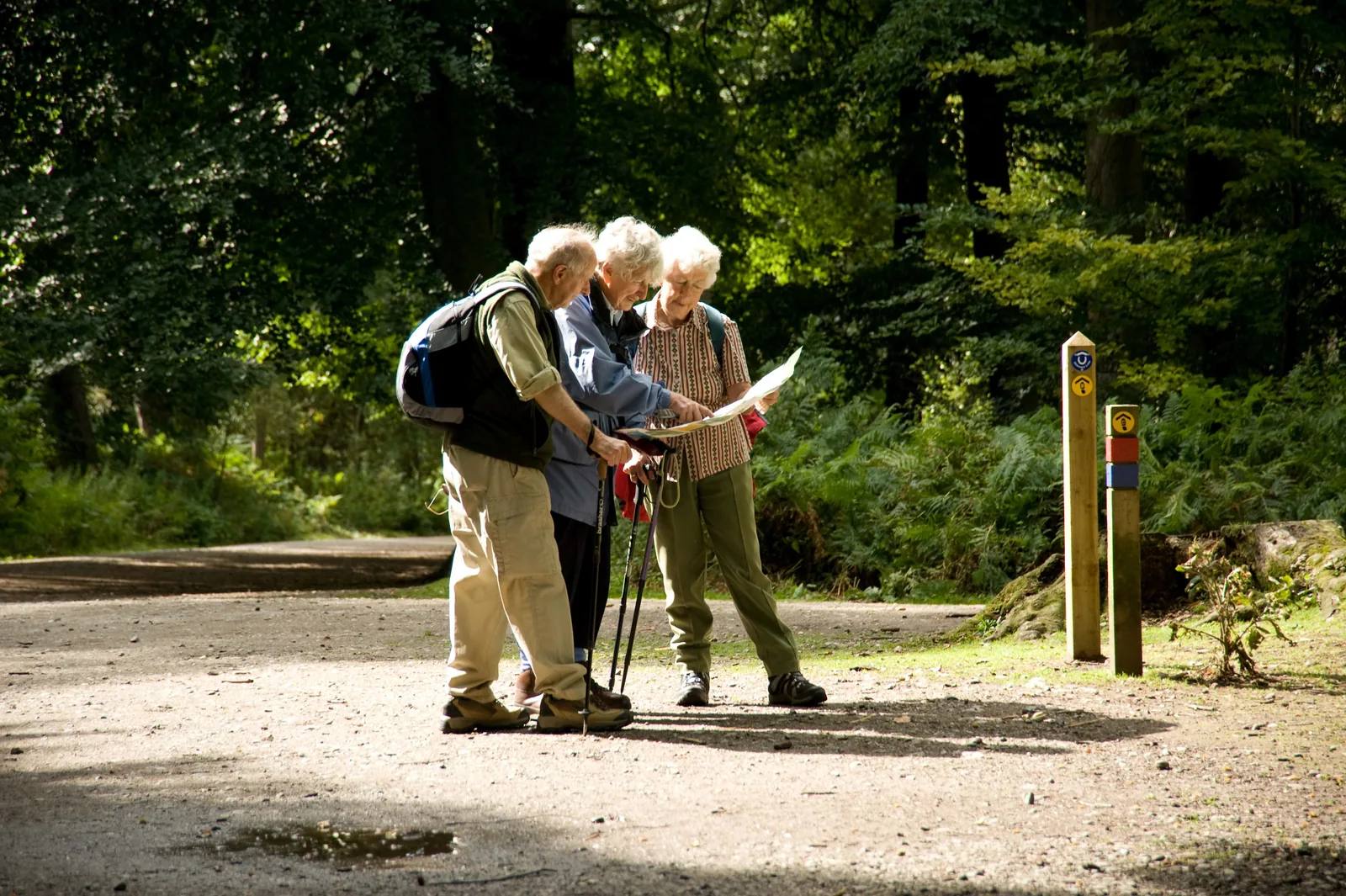
Whitefield Moor, near Brockenhurst A streamside choice between one-mile and 1.5-mile loops
Ober Water Trail at Whitefield Moor
- Distance
- 1.6km (1 mile) or 2.4km (1.5 miles)
- Time
- About 25 or 40 minutes
- Ground
- Moderately smooth gravel and compacted grass with gentle slopes, three bridges and no gates; muddy after wet weather
- Start
- Whitefield Moor car park on Rhinefield Road
The route
Follow the yellow and red waymarkers from Whitefield Moor car park down towards Ober Water. Stay with yellow for the shorter circular trail, or follow the red extension farther beside the stream before rejoining the marked return.
Open the official Ober Water Trail routeWhat dog owners need to know
Keep your dog close and under effective control around free-roaming livestock. From March to August stay on the main tracks with your dog, using a lead if needed. Keep dogs out of ponds, streams and wetlands to protect fragile habitat.
Before you go
The car park is open from 4am to 11pm and has two accessible spaces and toilets. Parking charges apply and payment is cashless. The route has a moderate gradient down to and back from the river, with a few resting places.
Watch for: The grass sections can become muddy and bridge approaches can develop small lips as surfaces erode. Check current signs before choosing the longer loop.
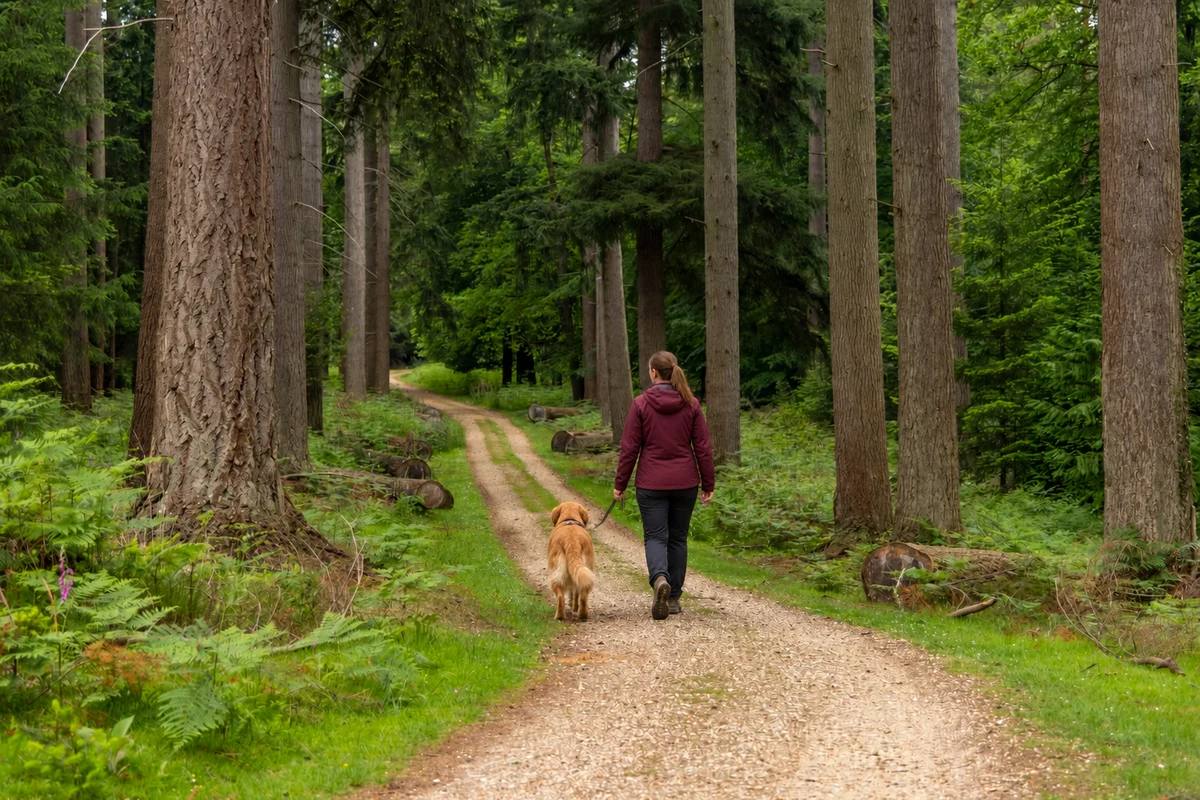
The Old Reptiliary, near Lyndhurst A short woodland loop with a seasonal car park
Old Reptiliary Discovery Trail
- Distance
- 1.6km (1 mile)
- Time
- About 25 minutes
- Ground
- Mostly smooth gravel with some grassy sections that can become muddy, plus a shared cycle-trail section
- Start
- The Old Reptiliary car park, when open
The route
From The Old Reptiliary car park, follow the red marker posts along the main gravel track around the circular woodland trail. When the seasonal car park is closed, Forestry England directs visitors to Millyford Bridge car park, where the route can be joined near the pond.
Open the official Discovery Trail routeWhat dog owners need to know
Keep dogs close and under effective control, and stay on the marked track. Use a lead around the car park, road, shared cycle section and grazing animals. Keep dogs away from ponds and wetland edges, and remain on the main tracks from March to August.
Before you go
The Old Reptiliary car park and toilets open seasonally during school and bank holidays, currently 10.30am to 3.30pm on listed open days. Parking charges apply. Check the official visitor page before travel and use Millyford Bridge when directed.
Watch for: The former Reptile Centre no longer displays reptiles and its information cabin is closed. Grass can be muddy and part of the trail is shared with cyclists.
Wilverley, between Burley and Brockenhurst The longest Forestry England waymarked woodland route here
Wilverley Wander Trail
- Distance
- 4km (2.5 miles)
- Time
- About 60 to 75 minutes
- Ground
- Moderately smooth gravel with some short steep slopes and a section shared with a cycle trail
- Start
- Wilverley car park off the B3058 Burley Road
The route
Follow the Wilverley Wander waymarkers from the car park through the mixed working woodland. The circular trail passes conifers, broadleaves and open areas before returning to the same car park.
Open the official Wilverley Wander routeWhat dog owners need to know
Keep dogs on leads in the car park and beside roads, and under effective control throughout. Stay on the marked track from March to August, give livestock and deer plenty of space, and use a lead on the shared cycle section when needed.
Before you go
Parking is permitted from 4am to 11pm. The site has four accessible parking spaces, toilets and picnic space, but parking charges apply and payment is cashless. Forestry operations can change local access, so obey current signs.
Watch for: Some slopes are short but steep. Cyclists share part of the route, and the surrounding lawn and heath are used by grazing livestock and ground-nesting birds.
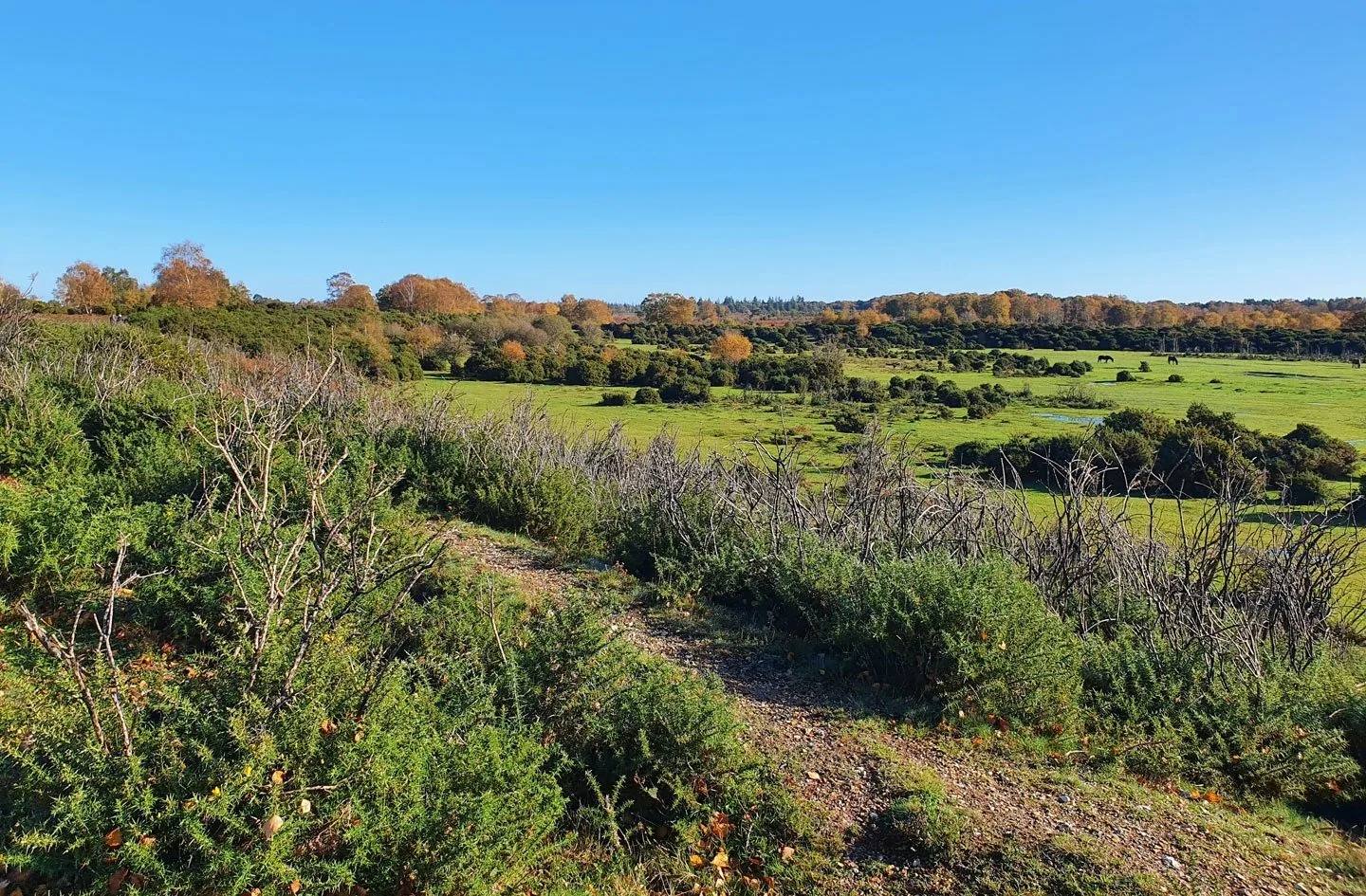
Rockford and Ibsley, western New Forest A longer heathland circuit with a shorter accessible option
Rockford Common Extended Trail
- Distance
- 4km (2.5 miles), or 2.7km (1.7 miles) short loop
- Time
- About 1.5 hours, or 45 minutes short loop
- Ground
- Well-made gravel on the short loop; the extension adds minor grass and gravel tracks, gradients, gates and stiles
- Start
- National Trust car park at Rockford Common, above the water splash by Moyles Court Oak
The route
Start at the water splash between Moyles Court School and Moyles Court Oak, then climb through the National Trust car park. Follow the leaflet north across the common. At the signed crossroads turn right for the shorter gravel loop, or take the smaller woodland path for the southern extension through Mount Farm before returning to the car park.
Open the official Rockford Common leafletWhat dog owners need to know
Rockford Common is grazed by free-roaming livestock and supports ground-nesting birds. Keep dogs close and under effective control, use a lead when recall is uncertain, stay on the main tracks from March to August and never allow chasing.
Before you go
The current National Park leaflet gives OS grid reference SU 162 083 and what3words yelled.layered.embraced for the National Trust car park. It lists the car park as the local facility and does not promise toilets or refreshments.
Watch for: The full loop has gates, stiles and rougher grass or gravel. Do not enter the eroding sand pit, and watch for adders and ticks in heathland and rough grass.
Parking, closures and seasonal access
Planning your New Forest dog walk
Forestry England now charges at its New Forest car parks, including Blue Badge bays, and asks everyone to park only inside official car parks. Most forest sites here are cashless and open from 4am to 11pm, but The Old Reptiliary is seasonal. Check the live visitor page and closure notices before travel, particularly from March to August when sensitive car parks can close for ground-nesting birds.
Forestry England, New Forest parking information
The useful short answers
Before you choose a New Forest dog walk
Can dogs be off lead in the New Forest?
Only when they remain close, visible and under effective control. The National Park dog code says to use a lead when recall is not reliable, in car parks and beside roads, around livestock or wildlife, and whenever signs require it.
What changes from March to August?
Rare birds nest on the ground. Stay on the main tracks with your dog, use a lead if needed and obey orange warning signs or temporary car-park closures. These seven routes use established tracks, but current signs still take priority.
What should I do around ponies and cattle?
Give them plenty of room and never let your dog approach or chase them. If cattle, ponies or other animals threaten or chase you, the official code says to release your dog so you can both get to safety separately.
Can my dog swim in New Forest streams and ponds?
Keep dogs out of ponds, streams and wetlands. These habitats support rare wildlife, and the official dog leaflet asks visitors to prevent disturbance and pollution. Natural water can also contain livestock waste, algae and submerged hazards.
Which route is most accessible?
Knightwood Oak is the clearest flat option: smooth gravel, no gates and benches, with two accessible parking bays. Blackwater Tall Trees is longer and mostly smooth, but it has road crossings, a 1.1m chicane and a bridge. Conditions can change, so check the official access page first.
Are there ticks or adders?
Yes. Ticks are common in wooded and grassy areas, especially in late spring and summer, and adders occur in heathland and rough grass. Keep dogs on tracks and close by, check them after the walk, and contact a vet immediately if you suspect an adder bite.
Help keep this guide useful
Is something wrong?
Dog rules, closures and access can change. Tell us what you spotted and we will check it against the latest official source before changing the guide.